The Hidden Gap: Bali’s Villas, Registration Reality, and the Urgent Need for Reform
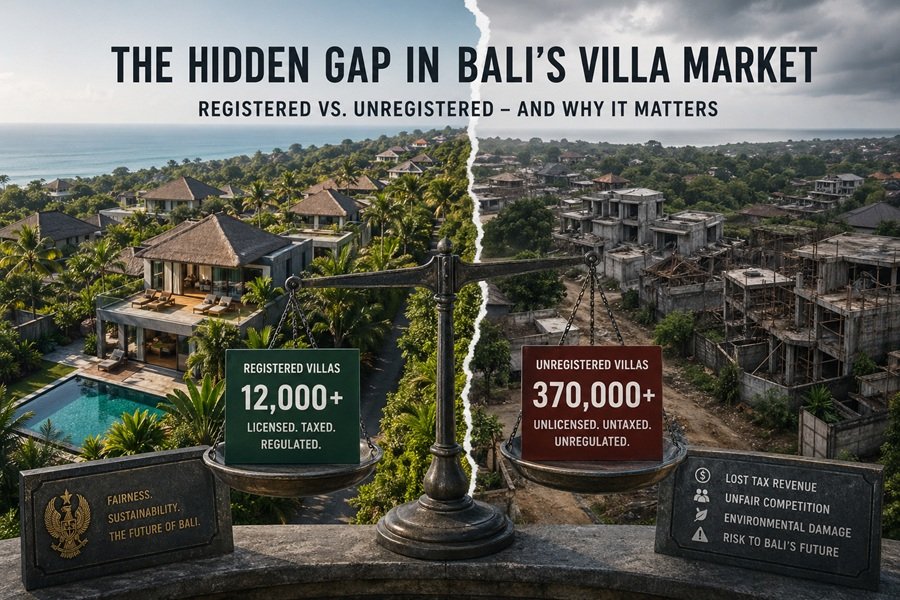
Bali’s villa market has become one of the most defining features of the island’s tourism economy. From the cliffs of Uluwatu to the rice fields of Ubud, private villas dominate online travel platforms and shape how millions of visitors experience the island. Yet behind this rapid growth lies a structural imbalance that is becoming impossible to ignore: the vast gap between the number of villas operating in Bali and those that are officially registered.
Recent industry discussions reveal just how wide this gap has become. Estimates suggest that while only around 12,000 villas are officially registered, there could be as many as 370,000 units actively listed or operating across digital platforms. Even more conservative data shows that of over 50,000 active short-term rental listings, only a fraction have completed formal licensing and verification processes. This discrepancy highlights a fundamental issue: a large portion of Bali’s accommodation sector exists outside formal regulation.
This imbalance has significant consequences for the island’s economy, its environment, and the long-term sustainability of its tourism model.
The most immediate impact is economic. Licensed villas are required to comply with tax obligations, business permits, and operational standards. Unregistered villas, on the other hand, often bypass these requirements. This creates an uneven playing field where compliant operators face higher costs while competing against unregulated properties offering lower prices. As a result, many legal villa operators report declining occupancy despite strong tourist arrivals, pointing to a market distorted by unfair competition.
Beyond business competition, the loss of tax revenue is substantial. When thousands of villas operate outside the system, local governments miss out on funds that are essential for infrastructure, waste management, and public services. This becomes especially critical in a destination like Bali, where tourism puts constant pressure on roads, water systems, and waste facilities. Authorities have already acknowledged that unlicensed accommodations contribute to this imbalance by benefiting from infrastructure without proportionate contribution.
The environmental impact is equally concerning. The rapid and often uncontrolled development of villas has led to construction in non-tourism zones, including green belts and protected areas. Illegal builds, poor waste management, and water overuse are increasingly common issues associated with unregulated properties. As Bali shifts toward a “quality tourism” model, these practices directly contradict sustainability goals and risk long-term damage to the island’s natural appeal.
The root causes of this situation are complex but interconnected. One of the primary drivers is the speed of development compared to the pace of regulation. Over the past decade, Bali’s villa market has expanded faster than the government’s ability to monitor and control it. Digital platforms have made it easier than ever to list properties globally, often without strict verification of legal status.
Another major factor is the conversion of residential properties into commercial villas. Many houses are repurposed into short-term rentals without proper zoning or permits, creating a grey market that is difficult to track. In addition, foreign investment structures and nominee arrangements have further complicated compliance, sometimes allowing villas to operate in legally ambiguous conditions.
There is also a knowledge gap among owners. The process of obtaining licenses in Indonesia can be complex, involving multiple permits such as building approvals, business identification numbers, and tourism licenses. For smaller investors or individual owners, this complexity often leads to shortcuts or non-compliance, whether intentional or not.
In response, the Indonesian government has begun to take more decisive action. New regulations introduced in 2026 require all accommodation providers to meet stricter licensing standards, with clear deadlines for compliance. Authorities are also increasing inspections, working with local village administrations to identify unregistered properties, and considering stricter enforcement measures including closures and delisting from online platforms.
However, enforcement alone will not solve the problem. A more holistic approach is needed.
First, there must be a clearer and more accessible regulatory framework. Simplifying the licensing process and providing transparent guidelines can encourage more owners to formalize their businesses. Without this, the gap between legal and illegal operations will persist.
Second, collaboration with online travel agencies is essential. Platforms should play a more active role in verifying the legal status of listings, ensuring that only compliant properties can operate at scale. This would significantly reduce the visibility of unregistered villas and push owners toward compliance.
Third, Bali needs a standardized classification system for villas. Unlike hotels, which follow established rating systems, the villa sector remains loosely defined. A clear classification framework would not only improve regulation but also enhance guest expectations and service quality.
Finally, enforcement must be consistent and fair. Selective crackdowns create uncertainty and can discourage investment. A transparent system where all operators are subject to the same rules will build trust and stability in the market.
Bali’s villa boom has brought undeniable economic benefits, attracting investment and diversifying accommodation options. But without proper regulation, that growth risks becoming unsustainable. The current gap between registered and unregistered villas is not just a regulatory issue—it is a signal that the market has outgrown its governance.
As Bali moves into a new phase focused on quality over quantity, addressing this imbalance will be critical. The future of the island’s villa industry depends not on how many properties exist, but on how well they are managed, regulated, and integrated into a sustainable tourism ecosystem.
Bali Villas Articles
- Bali International Hospital Hub with Bali Villas in Sanur
- Bali Visa Guide 2025
- Romantic Bali Villa Getaways
- Wellness Villas in Bali: Health & Nature Inspired Vacation Homes
- Bali Airport Prepares for Hantavirus Concerns: What Tourists Need to Know in 2026
- Why Foreigners in Bali Are Selling Villas Cheaply Due to NIB and OTA Rules
- Best Places to Build a Villa in Bali
- ROI Realities: Investing in Bali Villas in 2026
- Why Bali Villa Occupancy Is Down: Oversupply, Pricing & Global Travel Costs
- Canggu Bali: Full of Tourists and Villa Developments Even in Low Season
- Seminyak Beach Bali — Still a Luxury Destination Amid Erosion Challenges
- Why Jimbaran Is Bali’s New Luxury Villa Hotspot in 2025 | Bali Villas Guide
- Bali Villa Registration Gap: The Hidden Crisis Behind Unlicensed Rentals
- Amed Villas Development | New Bali Tourism & Villa Investment Destination
- Overtourism, Regulation & Crime: Bali Villa Owners Facing New Challenges
- Bali Diving Adventure | Explore Bali’s Underwater World Near Luxury Villas
- Bali Trekking Around Bali Hidden Trails and Stay in Scenic Bali Villas
- New OTA Rules Indonesia: Property Listings Must Have NIB in 2026
- Kelingking Beach Nusa Penida Glass Lift Controversy