Bali Prepares Airport Health Screening Amid Hantavirus Concerns: What Tourists Should Know Before Arriving
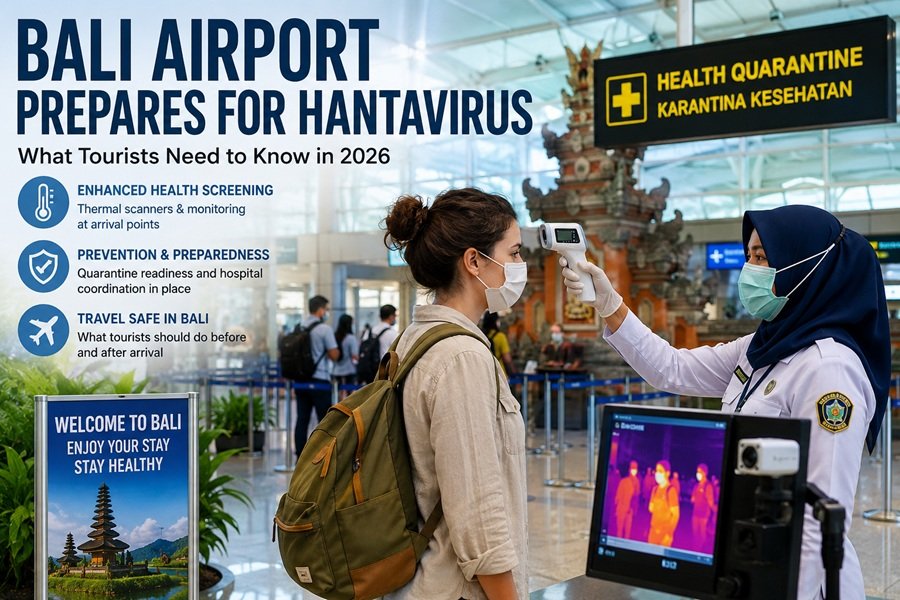
As Bali continues welcoming millions of international visitors every year, authorities are once again strengthening health surveillance at the island’s main gateway, I Gusti Ngurah Rai International Airport. Recent global concern surrounding virus outbreaks, including discussions online about hantavirus and Nipah virus risks in Asia, has prompted Indonesian authorities to tighten airport screening procedures and reinforce quarantine preparedness across Bali. While there are currently no confirmed hantavirus cases reported in Bali, the government is clearly trying to avoid repeating the delayed reactions seen during the COVID-19 era.
In recent months, Bali airport officials and the Denpasar Health Quarantine Center have begun implementing additional monitoring systems for arriving passengers. Thermal scanners are now operating at key arrival zones, including international terminals, domestic terminals, and VIP access points. These systems are designed to identify travelers showing signs of fever or respiratory illness before they enter the wider island community. Officials say the preparations are precautionary rather than a response to an active outbreak inside Bali itself.
Although much of the recent official discussion has focused on Nipah virus surveillance rather than hantavirus specifically, the government’s broader concern is clear: Bali’s tourism economy depends heavily on traveler confidence and rapid disease prevention. Authorities are therefore increasing biosecurity standards for all potential infectious diseases that may spread through international travel. Health officers at Bali airport are reportedly coordinating closely with Indonesia’s Ministry of Health and quarantine agencies to ensure faster response capability if symptomatic passengers are detected.
At the moment, there have been no official reports of hantavirus transmission in Bali. Public health reporting from Indonesian authorities and regional media indicate that Bali remains free from confirmed hantavirus outbreaks among residents or tourists. However, because hantavirus is associated with rodent exposure and can spread through contaminated environments, authorities are still maintaining vigilance, especially in crowded transportation hubs and tourism areas.
The concern surrounding hantavirus grew globally after social media discussions and international health monitoring highlighted several isolated cases in other countries earlier this year. The World Health Organization has clarified that hantavirus is not considered a new pandemic threat comparable to COVID-19, but governments across Asia continue increasing monitoring systems as a precaution. Bali’s approach appears focused on prevention rather than panic.
Airport preparations now include increased thermal surveillance, enhanced sanitation procedures, isolation room readiness, and referral coordination with hospitals in Denpasar. If a passenger is identified with symptoms such as fever, respiratory distress, or neurological complications, quarantine officers can immediately refer them to Prof. dr. I.G.N.G Ngoerah Hospital for evaluation and isolation. Bali health officials also say hospitals and community health centers across the island have improved preparedness since the pandemic years, including staff training and isolation infrastructure.
For tourists arriving in Bali, these new preparations may slightly change the airport experience. Travelers could encounter thermal camera checks, health declaration questions, or additional screening if they appear visibly unwell. In some situations, passengers may be asked about recent travel history to countries experiencing virus outbreaks. While most tourists will pass through normally, authorities are encouraging travelers to cooperate fully with airport health procedures to avoid delays and ensure faster entry processing.
Tourists can also take several practical steps to align with the government’s preventive efforts. Before arriving in Bali, travelers should monitor their health carefully and avoid flying if experiencing fever, breathing difficulties, or severe flu-like symptoms. Health insurance with international medical coverage is also increasingly recommended, particularly as governments worldwide continue improving infectious disease monitoring systems. Some travel advisories now encourage visitors to complete digital health declarations before arrival in Indonesia to streamline airport checks.
Once in Bali, maintaining basic hygiene remains one of the most effective forms of prevention. Frequent handwashing, avoiding poorly maintained environments, and ensuring accommodations maintain proper cleanliness standards are important not only for hantavirus concerns but for general travel health. Travelers staying in Bali villas, guesthouses, or remote eco-accommodations should also ensure food storage areas are clean and free from rodent exposure, since hantavirus is commonly linked to rodent contamination in enclosed spaces.
Interestingly, the recent discussions about airport screening may also influence Bali’s tourism image in a positive way. After years of criticism regarding overcrowding and weak enforcement in some sectors, many travelers now see stronger health surveillance as a sign that Bali is becoming more organized and proactive. Tourism operators, including Bali villas and hotels, are likely to benefit if visitors feel the island is taking health preparedness seriously.
Still, authorities face a delicate balancing act. Bali depends enormously on international tourism, and officials must avoid creating unnecessary fear among travelers while still maintaining strong prevention systems. So far, the messaging has remained calm and measured. Government agencies continue emphasizing that no local outbreak exists and that current screening measures are preventive only.
For now, Bali remains open, active, and welcoming to visitors from around the world. Beaches, villas, restaurants, and tourism attractions continue operating normally. The enhanced airport health monitoring simply reflects a broader global shift toward faster disease detection and improved traveler safety after the lessons learned from recent pandemics.
As international travel continues growing throughout 2026, Bali’s latest airport preparations show that the island is trying to protect both its residents and the millions of visitors who continue choosing Bali as one of the world’s favorite tropical destinations.
Bali Villas Articles
- Bali International Hospital Hub with Bali Villas in Sanur
- Bali Visa Guide 2025
- Romantic Bali Villa Getaways
- Wellness Villas in Bali: Health & Nature Inspired Vacation Homes
- Bali Airport Prepares for Hantavirus Concerns: What Tourists Need to Know in 2026
- Why Foreigners in Bali Are Selling Villas Cheaply Due to NIB and OTA Rules
- Best Places to Build a Villa in Bali
- ROI Realities: Investing in Bali Villas in 2026
- Why Bali Villa Occupancy Is Down: Oversupply, Pricing & Global Travel Costs
- Canggu Bali: Full of Tourists and Villa Developments Even in Low Season
- Seminyak Beach Bali — Still a Luxury Destination Amid Erosion Challenges
- Why Jimbaran Is Bali’s New Luxury Villa Hotspot in 2025 | Bali Villas Guide
- Bali Villa Registration Gap: The Hidden Crisis Behind Unlicensed Rentals
- Amed Villas Development | New Bali Tourism & Villa Investment Destination
- Overtourism, Regulation & Crime: Bali Villa Owners Facing New Challenges
- Bali Diving Adventure | Explore Bali’s Underwater World Near Luxury Villas
- Bali Trekking Around Bali Hidden Trails and Stay in Scenic Bali Villas
- New OTA Rules Indonesia: Property Listings Must Have NIB in 2026
- Kelingking Beach Nusa Penida Glass Lift Controversy