2025 Bali Villa Design Trends: Japandi Style & Organic Curves
A New Chapter in Bali Villa Design
Bali has always been a global reference point for tropical villa living. Yet as we move into 2025, villa design on the island is entering a more refined and thoughtful phase. The era of purely decorative luxury is giving way to intentional design—spaces that are calm, functional, sustainable, and emotionally engaging.
In 2025, Bali villa design is shaped by changing traveler expectations, long-stay lifestyles, sustainability awareness, and global architectural movements adapted to the tropical context. From Japandi minimalism to organic curves and sculptural forms, these trends are redefining what modern luxury means in Bali.
Japandi Style: Calm, Minimal, and Timeless
One of the strongest influences in 2025 Bali villas is Japandi design, a fusion of Japanese minimalism and Scandinavian warmth. This style resonates deeply with Bali’s natural environment and slower pace of living.
Key Japandi elements seen in Bali villas include:
-
Clean, uncluttered layouts
-
Neutral palettes with warm beige, sand, and soft grey
-
Natural wood furniture with simple lines
-
>Emphasis on light, shadow, and negative space
In Bali, Japandi is adapted using local materials such as teak, suar wood, and natural stone. The result is villas that feel peaceful and balanced—highly attractive to digital nomads, wellness travelers, and long-stay guests seeking mental clarity rather than visual excess.
Organic Curves: Moving Away from Sharp Geometry
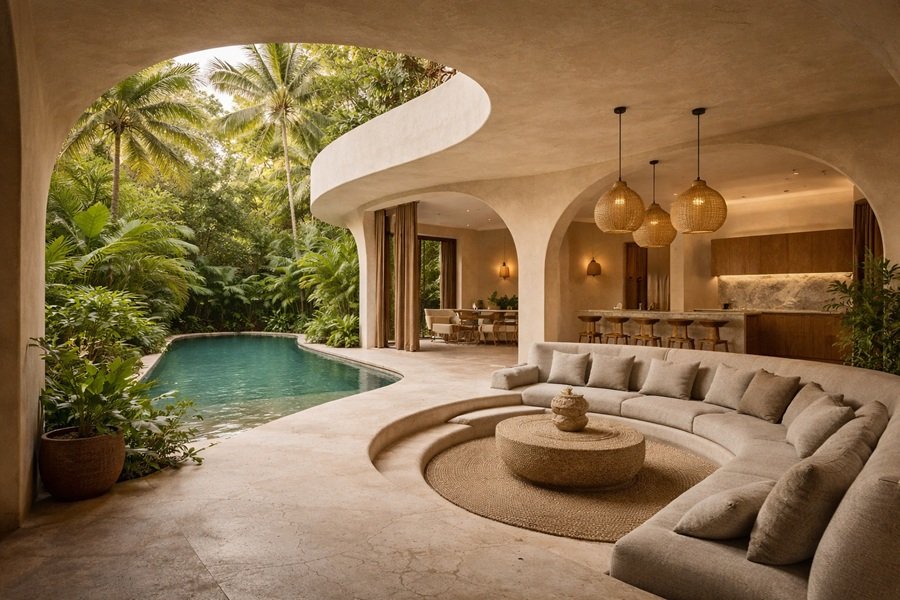
Another defining trend for 2025 is the rise of organic curves. Straight lines and boxy structures are being replaced by soft arches, rounded walls, and flowing forms inspired by nature. This trend appears in:
-
Curved villa façades and roofs
-
Arched doorways and windows
-
Rounded swimming pools and sunken lounges
-
Sculptural staircases and built-in seating
Organic curves create a sense of comfort and fluidity while visually blending villas into their surroundings. In Bali’s tropical landscape, these shapes echo hills, rivers, and coastlines—making villas feel less imposed on nature and more organically connected to it.
Earthy and Muted Color Palettes
Bright whites and high-contrast interiors are slowly giving way to earthy, muted tones. In 2025, Bali villa interiors favor colors that feel grounded and timeless. Popular palettes include:
-
Warm sand and limestone
-
Terracotta and clay
-
Soft olive and sage green
-
Taupe, greige, and mushroom tones
These colors not only age better but also perform well in Bali’s natural light. They create a soothing atmosphere that enhances relaxation, making villas feel like sanctuaries rather than showrooms.
Indoor–Outdoor Living, Refined
Indoor–outdoor living has always been a signature of Bali villas, but in 2025 it is becoming more refined and purposeful. Instead of fully open spaces that sacrifice comfort, designers now focus on flexible openness. Key developments include:
-
Large sliding or pivot doors instead of permanently open walls
-
Semi-open living areas protected from rain and insects
-
Seamless flooring transitions between indoor and outdoor zones
-
Courtyards and inner gardens as focal points
This evolution reflects guest demand for comfort, privacy, and functionality—especially for long-term stays and remote work lifestyles.
Natural and Sustainable Materials Take Center Stage
Sustainability is no longer a marketing feature; it is a design expectation. Bali villa trends in 2025 emphasize honest materials that age gracefully and reduce environmental impact. Commonly used materials include:
-
Natural stone and terrazzo
-
Reclaimed or responsibly sourced wood
-
Bamboo and rattan
-
Lime plaster and textured finishes
Rather than hiding imperfections, designers now celebrate texture and craftsmanship. Walls may show hand-applied finishes, and furniture often highlights joinery and natural grain. This approach aligns perfectly with Bali’s artisanal traditions.
Built-In Furniture and Custom Details
Mass-produced furniture is slowly being replaced by custom-built elements. Built-in sofas, daybeds, shelves, and headboards are becoming standard in 2025 Bali villas. The advantages are clear:
-
Better spatial efficiency
-
Cleaner visual lines
-
Stronger architectural identity
-
Reduced need for excessive décor
These custom details make villas feel unique and intentional—an important factor for branding and rental appeal in a competitive villa market.
Wellness-Driven Spaces
Wellness continues to shape villa design, but in 2025 it becomes more subtle and integrated. Instead of overt “spa-like” themes, villas now incorporate wellness through layout and atmosphere. Design features include:
-
Dedicated yoga or meditation corners
-
Outdoor bathtubs surrounded by greenery
-
Natural ventilation and cross-breezes
-
Soft lighting and acoustic comfort
The goal is to support well-being without overstatement. This quiet approach to wellness resonates strongly with modern travelers who value authenticity over trends.
Smart Design Without Visual Noise
Technology remains important, but in 2025 it is invisible. Bali villas increasingly integrate smart systems that enhance comfort without disrupting aesthetics. Examples include:
-
Concealed air-conditioning systems
-
Smart lighting with warm temperature settings
-
Energy-efficient appliances
-
High-speed internet discreetly integrated into design
This balance between technology and tranquility is essential for villas targeting premium guests and remote professionals.
Smaller, Smarter Luxury
Oversized villas are no longer the default aspiration. In 2025, there is a noticeable shift toward smaller but smarter luxury villas. Efficient layouts, thoughtful zoning, and multifunctional spaces outperform sheer size. This trend is driven by:
-
>Rising construction costs
-
Sustainability concerns
-
Demand for manageable, low-maintenance properties
-
Stronger returns for boutique villas
Well-designed two- and three-bedroom villas often outperform larger properties in both occupancy and guest satisfaction.
Why These Trends Matter for Villa Owners and Investors
Design trends are not just aesthetic—they directly impact rental performance, longevity, and brand positioning. Villas that embrace timeless design, sustainability, and functionality are more resilient in changing market conditions. In 2025, successful Bali villas are those that:
-
Photograph well without excessive styling
-
Appeal to long-stay and repeat guests
-
Require less renovation over time
-
Align with Bali’s evolving tourism direction
Investors and developers who understand these trends can future-proof their properties and stand out in an increasingly crowded market.
Conclusion: A More Conscious Luxury
The 2025 design trends in Bali villas reflect a broader shift toward conscious luxury—where beauty, comfort, and responsibility coexist. Japandi minimalism, organic curves, earthy materials, and wellness-focused spaces are not passing fads; they represent a deeper change in how people want to live, travel, and connect with their surroundings.
As Bali continues to mature as a global villa destination, design will play a critical role in defining value. Villas that embrace these trends will not only look beautiful today but remain relevant for years to come.
Bali Villas Articles
- New Direct Flights to Bali in 2026: A Tourism Boost or a Booking Challenge for Villa Owners?
- Bali Villas: How the Iran War Is Impacting Villa Occupancy in 2026
- Sustainable Villas in Bali: The Rise of Eco-Luxury Living
- Canggu Bali: Full of Tourists and Villa Developments Even in Low Season
- Seminyak Beach Bali — Still a Luxury Destination Amid Erosion Challenges
- Why Jimbaran Is Bali’s New Luxury Villa Hotspot in 2025 | Bali Villas Guide
- Bali Villa Registration Gap: The Hidden Crisis Behind Unlicensed Rentals
- Amed Villas Development | New Bali Tourism & Villa Investment Destination
- Overtourism, Regulation & Crime: Bali Villa Owners Facing New Challenges
- Bali Diving Adventure | Explore Bali’s Underwater World Near Luxury Villas
- Bali Trekking Around Bali Hidden Trails and Stay in Scenic Bali Villas
- New OTA Rules Indonesia: Property Listings Must Have NIB in 2026
- Best Areas to Buy a Villa in Bali in 2026 | Investment Guide
- Bali Visa Guide 2025
- Romantic Bali Villa Getaways
- Wellness Villas in Bali: Health & Nature Inspired Vacation Homes
- Bali Airport Prepares for Hantavirus Concerns: What Tourists Need to Know in 2026
- Why Foreigners in Bali Are Selling Villas Cheaply Due to NIB and OTA Rules
- Best Places to Build a Villa in Bali
- ROI Realities: Investing in Bali Villas in 2026
- Why Bali Villa Occupancy Is Down: Oversupply, Pricing & Global Travel Costs